
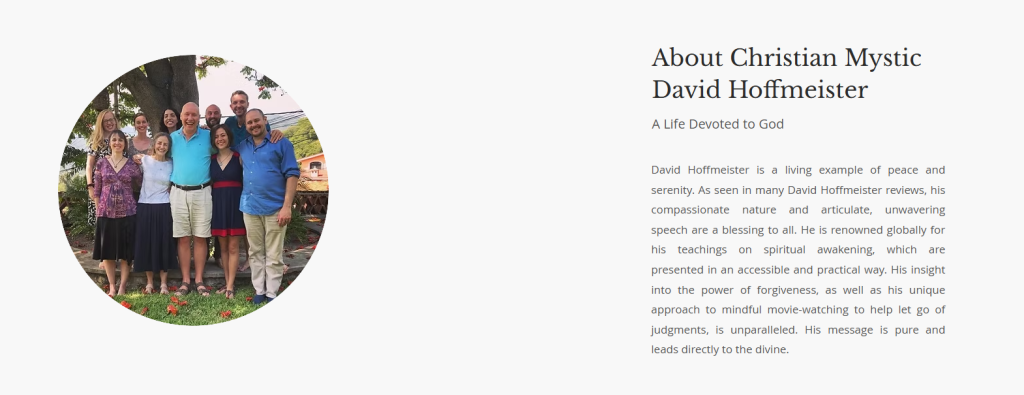
The keyword david hoffmeister controversy is often searched by users trying to understand not only his teachings but also his public reputation. In many cases, what appears as “controversy” is actually a mix of public perception, online reviews, and interpretation differences, rather than any verified issue.
In contrast to negative framing, many David Hoffmeister reviews describe him as a figure associated with peace, clarity, and spiritual guidance. This article focuses on how reputation is formed through audience feedback, digital perception, and interpretive narratives.
📊 Reputation Overview Framework
| Aspect | Description |
|---|---|
| Public Image | Spiritual teacher of non-duality |
| Core Reputation | Peaceful and calm communication style |
| Teaching Style | Accessible and experiential |
| Audience Feedback | Mixed but largely interpretive |
| Global Reach | International spiritual community |
His public reputation is shaped more by audience experience than institutional validation.
🌍 Understanding Public Reviews and Perception
Public reviews of spiritual teachers often reflect personal experience rather than objective measurement.
Key Characteristics of Reviews:
- emotionally influenced feedback
- subjective interpretation of teachings
- selective exposure to content
- varied cultural understanding
This means reviews can differ significantly from one person to another.
🧠 Positive Perception Themes in Reviews
Many David Hoffmeister reviews highlight positive impressions.
1. Sense of Peace
- described as calm and centered
- teachings often associated with emotional relief
- focus on inner stability
2. Clear Communication Style
- simple explanation of complex ideas
- structured spiritual guidance
- emphasis on experiential understanding
3. Compassionate Teaching Approach
- focus on forgiveness
- non-judgmental perspective
- supportive spiritual tone
4. Accessibility of Teachings
- available through online platforms
- easy global access
- flexible learning format
📊 Review-Based Perception Table
| Category | Positive Feedback | Interpretive Variation |
|---|---|---|
| Communication | Clear and calm | Sometimes abstract |
| Teachings | Peace-oriented | Open to interpretation |
| Accessibility | Easy global reach | Digital fragmentation |
| Emotional impact | Healing experience | Subjective response |
🔍 Why “Controversy” Appears Despite Positive Reviews
Even when reviews are positive, the keyword david hoffmeister controversy still appears due to several structural reasons:
1. Search Behavior Patterns
Users often search:
- both positive and critical perspectives
- combined keywords like “reviews” and “controversy”
- comparison-based queries
2. Mixed Online Narratives
Digital platforms contain:
- supportive testimonials
- critical interpretations
- philosophical debates
This mix creates perception diversity.
3. Fragmented Content Exposure
Many users only see:
- short clips
- isolated quotes
- partial summaries
This leads to incomplete understanding.
🧩 Nature of Spiritual Reviews
Unlike product reviews, spiritual reviews are:
Subjective by Nature
- based on emotional experience
- influenced by belief systems
- shaped by personal interpretation
Non-Quantifiable
- no measurable outcome scale
- no standardized evaluation method
- depends on inner perception
📌 Interpretation Layers in Public Opinion
Public perception of David Hoffmeister typically develops in layers:
Layer 1: First Impression
- calm speech
- peaceful presentation
- accessible teaching style
Layer 2: Engagement Stage
- deeper exposure to teachings
- understanding ACIM concepts
- personal interpretation begins
Layer 3: Reflection Stage
- emotional or intellectual response forms
- either acceptance or skepticism develops
- long-term perception is established
📊 Summary Table: Reputation Formation
| Stage | User Experience | Result |
|---|---|---|
| Exposure | Initial contact | Neutral impression |
| Engagement | Learning phase | Interest or confusion |
| Reflection | Deep analysis | Support or skepticism |
🌐 Digital Influence on Reviews
Modern digital platforms strongly affect how spiritual reputations are formed.
Key Influences:
- algorithm-based visibility
- selective content distribution
- user-generated interpretations
- viral emotional content
These factors shape collective perception more than direct experience.
🧠 Analytical Insight
David Hoffmeister’s reputation demonstrates how modern spirituality is evaluated in a digital environment:
- perception replaces formal validation
- experience replaces structured measurement
- interpretation replaces objective assessment
This creates a flexible but highly variable public image.
📌 Balanced Understanding of Public Image
A balanced view of available reviews suggests:
- many users report positive emotional experiences
- interpretations vary significantly across audiences
- controversy is often perception-based, not factual
- teachings are evaluated subjectively rather than objectively
🧾 Final Section
The discussion around david hoffmeister controversy is closely linked to how public reviews and perceptions are formed in digital environments. While many David Hoffmeister reviews describe calmness, clarity, and peaceful communication, online narratives can still vary due to interpretation differences and fragmented content exposure.
Overall, his reputation is shaped more by subjective experience than by any verified controversy, highlighting how modern spiritual figures are evaluated through perception rather than formal assessment.
